
Top 7 Hard-to-Find Taylor Forklift Axle Parts — and Where to Actually Get Them
If you run Taylor heavy lift equipment, you already know the parts situation. Taylor builds exceptional machines — some of the most durable industrial forklifts ever made — but when a drivetrain component goes down, the supply chain can go quiet fast. OEM lead times stretch, distributors shrug, and the equipment sits.
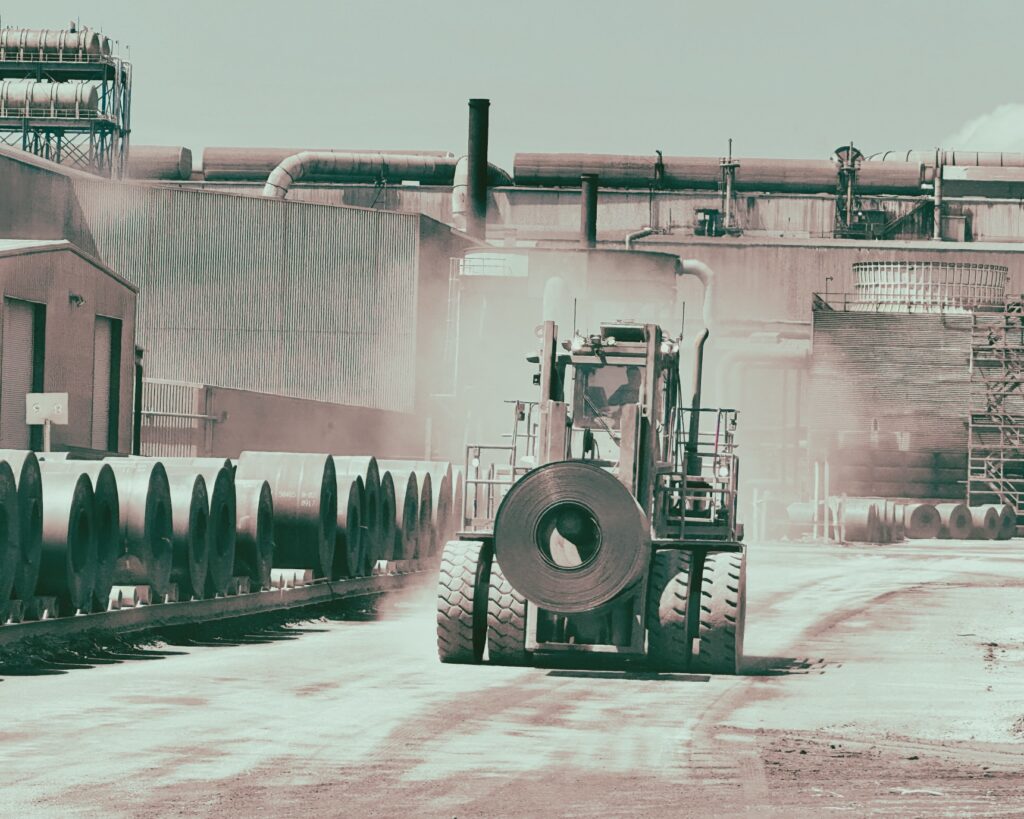
We’ve been sourcing and rebuilding Taylor drivetrain components since 1995. Here’s what we see come across our counter most often — and what you can actually do about it.
A Note on Axle Obsolescence — and What We’ve Done About It
Two of the axle platforms most commonly found in Taylor heavy lift equipment have been discontinued by AxleTech (later Meritor, now Cummins). Parts are no longer available through any normal distribution channel. Between them, these axles are present in hundreds of machines currently operating in steel mills, ports, and industrial facilities across North America.
We’ve spent considerable time and resources solving both problems — one with a direct drop-in replacement axle assembly, and one with a conversion kit we developed in-house. If your Taylor equipment is running on either of these platforms, there’s a path forward. Both are covered below.
1. AxleTech PRLC3805 and PRC3806 Series Axles (Taylor 550, 650, and 700 Series)
This is the most urgent obsolescence situation in the Taylor parts world right now.
AxleTech supplied two closely related axle platforms — the PRLC3805 and PRC3806 — across a wide range of Taylor 550, 650, and 700 series models. Both are now fully discontinued. Parts are no longer available through any supply channel, OEM or aftermarket.
These axles appear across dozens of model designations — T, TX, TXI, TE, TED, X, XH, XO, and XHO configurations spanning the 550 through 700 series — representing hundreds of machines currently operating in steel mills, ports, and industrial facilities across North America. If your Taylor was built in this era, there’s a reasonable chance it’s running one of these axles.
We’ve resolved this for several steel mill customers who depend on this equipment. There is a direct drop-in replacement axle available that installs without modification to the machine and gets equipment back in service without an extended downtime event. If you’re running any of these models and haven’t addressed this yet, it’s worth a conversation before you’re making that call from the shop floor.
Is My Taylor Running a PRLC3805 or PRC3806 Axle?
The following Taylor models were produced with one or both of these axle platforms. This list is not exhaustive, but covers the most common configurations we see in the field:
550 Series: T550RR, TE550L
650 Series: T650L, T650L00, T650L01, T650S, TE650L, TE650L00, TE650S, TED650L, TX650L, TX650S, TXI650L, TXI650L00, TXI650L01, TXI650S, TXI650S01, X650L, X650S, XH650L, XHO650L, XO650S
700 Series: T700L, T700L04, T700L05, TE700L, TX700L, TXIO700L, TXI700L, TXI700L00, TXI700L01, X700L, XH700L
If your model isn’t listed here and you’re unsure what axle it’s running, we can help you identify it from the serial number or axle tag.
How Do I Know Which Axle My Taylor Is Running?
Two ways to find out:
- Machine serial number. If you have the serial number from your Taylor, we can look it up and tell you exactly which axle platform it shipped with. Call us, use the chat below, or send it through the contact form on our site.
- The axle data tag. Every axle assembly has a data tag that identifies the model and series. If you’re not sure where to find it, we put together a quick reference guide: How to Locate an Axle Data Tag
Either way, it’s a quick answer — and worth knowing before you’re in a downtime situation.
2. AxleTech PRC5324/5334 / PRLC5324/5334 Series Axle (Taylor 800, 900, 925, and 950 Series)
The 800, 900, 925, and 950 series Taylors are workhorses. You’ll find them moving steel coils in mills and stacking containers at ports around the country. Many of them shipped from the factory with an AxleTech 5324 or 5334 series axle. Like the PRLC3805 and PRC3806, this platform is now obsolete — parts are no longer available through normal channels.
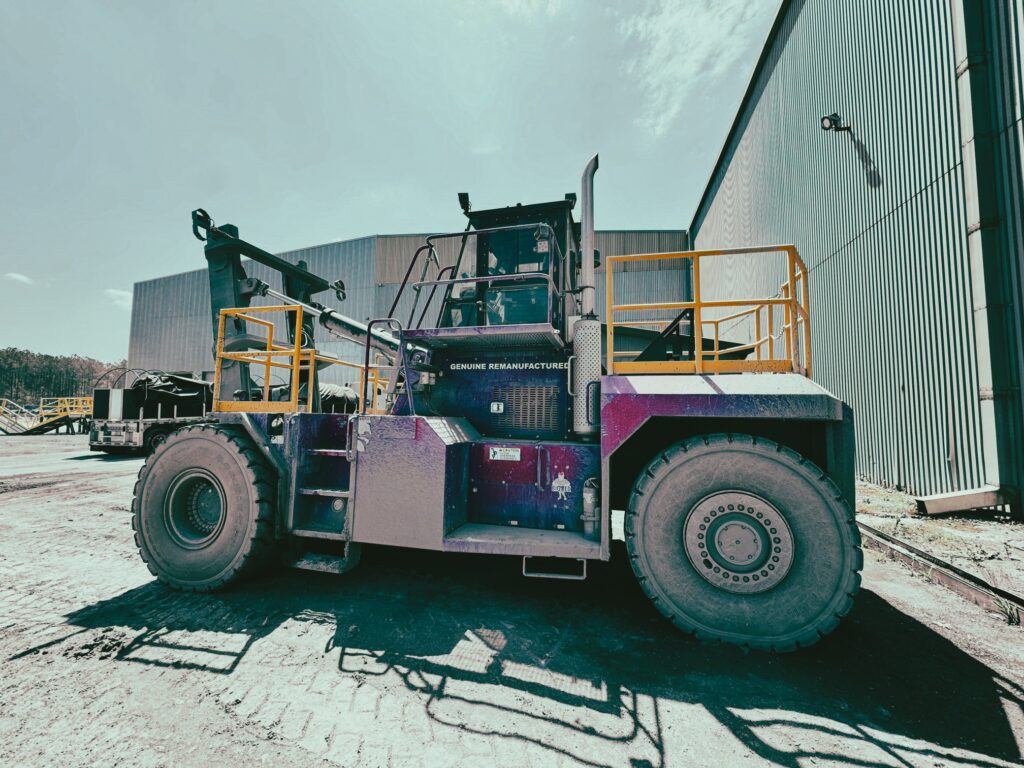
The difference here is that we didn’t just find a replacement axle. We engineered a solution.
Heavy Duty Transaxle developed a conversion kit specifically for this application. The kit replaces the differential carrier and wheel ends — the hub, planetary, brakes, and related components — with modern, fully supported parts. The axle housing stays in place. Everything is a direct drop-in replacement. No retrofitting, no machine modifications, no fabrication.
We’ve completed this conversion for multiple steel mill customers running heavy coil-handling applications, and for port operators using 900-series machines as container handlers. A forklift that was headed toward early retirement — because parts simply weren’t available — now has a clear service and parts path going forward.
If you’re running any of these Taylor models and have been told the axle is obsolete, that’s not the end of the road.
Is My Taylor Running a PRC5324, PRLC5324, or PRLC5334 Axle?
The following Taylor models were produced with one or more of these axle platforms. This list is not exhaustive, but covers the most common configurations we see in the field:
800 Series: TE800L, TE800L00, TE800S00, TE800S04, TE800S, TELS800
900/920/925 Series: TE900S, TE900S/R, TE900S/X, TE900S01, TE900SX, TE925S, TE925S/X, TE925S00, TE925S01, TE925S04, TE925SX, TEC920L, TLS900
950/955/995 Series: TE950S, TEC950L, TEC955L, TECP950L, TEFC950L, TRSC995I, TRSC995S
If your model isn’t listed here and you’re unsure what axle it’s running, we can help you identify it from the serial number or axle tag. See the FAQ in the section above: How Do I Know Which Axle My Taylor Is Running?
3. Taylor Differential Assemblies and Carrier Components
Taylor uses Meritor and AxleTech differentials across much of its product line, but the specific gear ratios, carrier housings, and assembly configurations don’t always match what’s on a typical warehouse shelf. Getting the right carrier, ring-and-pinion ratio, and bearing kit for a Taylor differential often requires someone who knows which OEM component maps to which Taylor part number — and can source or rebuild accordingly.
4. Planetary Hub Assemblies
Planetary reduction hubs take a beating in heavy-cycle applications — ports, steel mills, and paper operations in particular. When a planetary hub needs service, the sun gear, planet gears, and carrier are often worn beyond individual replacement. Complete rebuild kits aren’t always available through general distribution. A drivetrain rebuilder with Taylor-specific interchange experience can typically source components or supply a rebuilt exchange unit faster than waiting on OEM channels.
5. Brake Actuators and Wet Brake Components
Taylor’s heavy lift models use wet disc brake systems — typically sourced from AxleTech or Meritor — and the actuators, friction discs, and seal kits are application-specific. Cross-referencing these to the correct OEM part number rather than searching by Taylor’s internal number is often the fastest route to getting parts in hand.
6. Axle Shafts and Spindle Components
Axle shafts fail in shock-load environments. Taylor equipment running in steel mills, scrap handling, and container yards sees the kind of lateral loading that accelerates this failure mode. Taylor shaft part numbers often cross to Meritor or Rockwell components — but only if you have the interchange. Without it, you’re either waiting on OEM pricing and lead times, or guessing.
7. Seals, Bearings, and Overhaul Kits — Sourced to OEM Spec
This category sounds routine, but it’s where a lot of money gets wasted. Generic seals and off-spec bearings in a heavy-duty axle are a short-term fix that leads to a repeat failure. Taylor drivetrain components use Timken, SKF, and other bearing specifications that need to match the load ratings of the original design. We source these to OEM spec and can supply them individually or as part of a complete overhaul kit.
The Interchange Advantage
What makes sourcing Taylor parts difficult isn’t always availability — it’s translation. Taylor uses its own internal part numbering system, and matching those numbers to the AxleTech, Meritor, Kessler, and Spicer components that actually make up the assembly is a lookup most suppliers can’t do.
We’ve built that interchange internally over three decades. If you have a Taylor part number and can’t find it, call us before you give up on the search.